
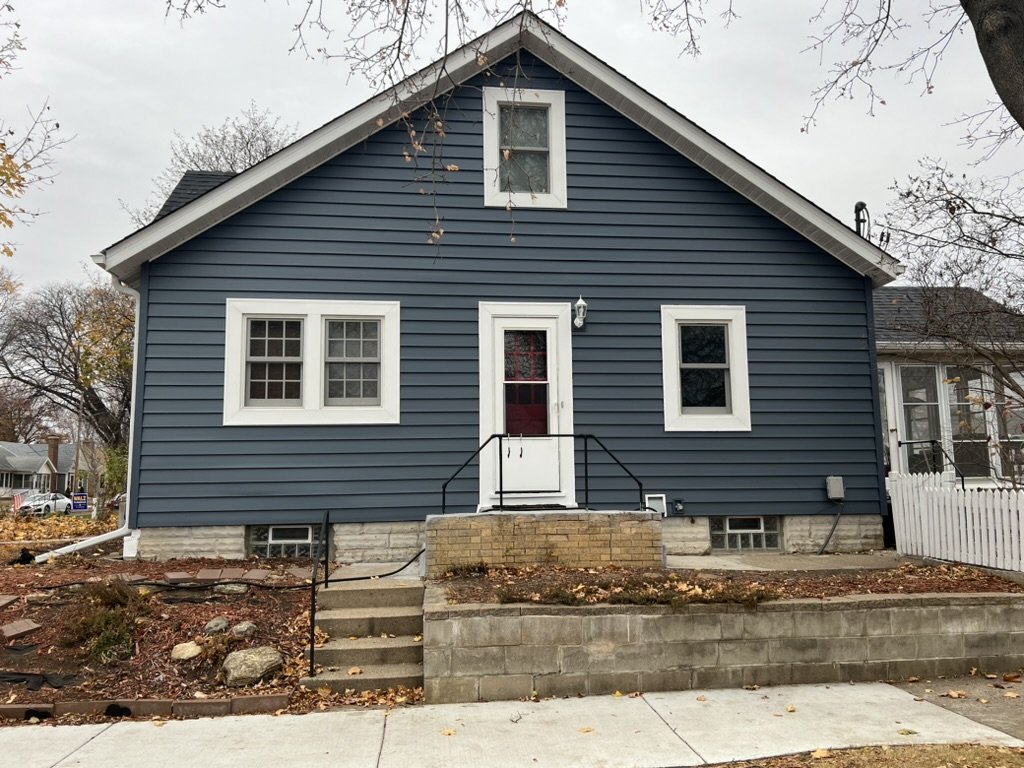
How do I know when my siding needs to be replaced?
Siding needs replacement when you can see cracking, warping, chalking, or soft spots in the sheathing behind it, not simply when it looks dated. Dated-but-sound siding is a different decision entirely, and it turns on how siding drives first impressions and resale rather than on failure. In Minnesota, the freeze-thaw cycle drives water into small cracks, freezes it overnight, and widens the opening a little more every winter until moisture reaches the wall assembly.
Hail is the other trigger. A hailstorm that dents gutters and fascia almost always leaves impact marks on the sun-facing side of the house, and those punctures are what turn a cosmetic problem into a rot problem two seasons later.
- Cracked, split, or holed panels, especially on south and west elevations
- Chalky residue on your hand after touching the siding
- Bubbling or blistering paint on interior walls (moisture behind the siding)
- Rising heating bills with no other explanation
- Loose or rattling panels after a wind event
- Visible dents on soft metals, gutters, downspouts, AC fins, after hail